AI and Book Publishing in 2026: 4 Changes Every Author Should Know
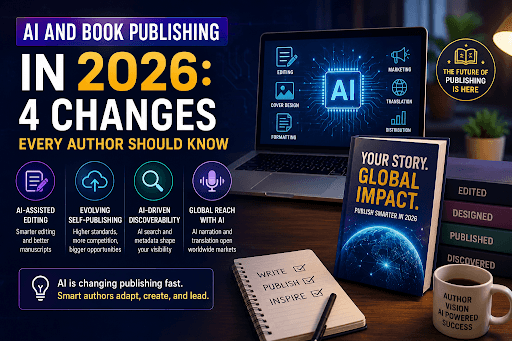
1. AI-Assisted Editing Has Become the Industry Standard
Five years ago, AI editing meant grammar suggestions. In 2026, large language models can analyze pacing, flag plot inconsistencies, evaluate chapter structure, and even assess whether your opening hook matches genre expectations. Developmental feedback that once cost thousands of dollars as a first pass is now available in minutes.
AI tools evaluate patterns; they don't understand your intent. They can tell you a chapter is slow, but they can't tell you whether that slowness builds tension or kills it. This is why the modern editorial workflow looks like a hybrid:
- First pass (AI): grammar, consistency, readability scoring, and repetition detection
- Second pass (human line editor): voice, rhythm, emotional resonance, and clarity
- Final pass (human proofreader): the errors machines still miss, especially in dialogue and formatting
2. Self-Publishing Has Split Into Two Very Different Markets
Retail platforms saw a surge of fully AI-generated titles between 2023 and 2025 and responded aggressively. Amazon now limits daily uploads, requires AI-content disclosure, and its recommendation algorithm quietly deprioritizes books with poor engagement metrics like high return rates and low read-through.
On the other side sit authors who treat their book like a product launch: professional cover design, clean interior formatting, optimized metadata, and a real marketing plan. Many of them rely on self publishing services to handle the technical side, including ISBN registration, print-on-demand setup, ebook conversion, and global distribution while they focus on writing and audience building.
| Factor | DIY / AI-Only Approach | Professionally Supported Publishing |
|---|---|---|
| Time to publish | Days to weeks | 4–10 weeks |
| Upfront cost | Very low | Moderate (packages vary) |
| Editing quality | AI-only, inconsistent | AI + human editorial team |
| Cover & interior design | Template-based | Custom, genre-targeted |
| Platform compliance | The author's responsibility | Handled and verified |
| Long-term sales potential | Low without marketing | Significantly higher |
| Author royalties | High % but low volume | High % with better volume |
3. Discoverability Now Depends on AI Search, Not Just Amazon Keywords
In 2026, a growing share of book discovery happens through AI assistants and answer engines rather than traditional search. When a reader asks, "What's a good leadership book by a healthcare founder?" the AI pulls from author websites, reviews, interviews, retailer metadata, and structured data across the web.
- A professional author website with a clear bio, credentials, and book details
- Structured metadata — accurate categories, complete ISBN records, and rich book descriptions
- Third-party validation — editorial reviews, media mentions, and verified reader reviews
- Consistent author information across retailers, Goodreads, and social platforms
Publishers now talk about "answer engine optimization" the way they once talked about keyword stuffing. If you're wondering how to publish a book that actually gets discovered in this environment, the answer starts before launch day: your title, subtitle, categories, and description should be written for both human browsers and AI recommendation systems. Vague descriptions get skipped by both.
4. AI Narration and Translation Have Opened Global Markets
Audiobook production used to cost $3,000–$6,000 for a full-length title. AI narration — including tools that clone an author's own voice with permission — has cut that cost dramatically. Quality has improved to the point where major platforms accept AI-narrated titles, though listeners still pay a premium for human narration in fiction, where emotional performance matters.
AI translation has matured similarly. Authors are now releasing Spanish, German, and Portuguese editions within months of their English launch, something previously reserved for bestsellers with foreign rights deals. The smart workflow pairs machine translation with a native-speaking human reviewer, keeping costs a fraction of traditional translation while protecting quality.
What This Means for You as an Author
- Use AI for speed, humans for quality. Draft and self-edit with AI assistance, then invest in professional editing before launch.
- Pick your publishing path consciously. Fully DIY is viable only if you enjoy learning platforms, design, and compliance rules.
- Build your discoverability footprint early. Author website, clean metadata, and reviews are no longer optional extras.
- Plan for formats, not just a format. Ebook, paperback, hardcover, and audiobook together maximize every reader's preferred way to buy.
Ready to Publish in 2026? Let's Talk.
FAQs
1. Is it okay to use AI when writing or publishing my book in 2026?
Yes, AI is widely accepted as a drafting, editing, and research assistant. However, major retailers like Amazon require you to disclose fully AI-generated content (as opposed to AI-assisted work). Books written by you and refined with AI tools generally don't require disclosure, but always check each platform's current policy before publishing.
2. How much does it cost to publish a book professionally in 2026?
Costs vary by scope. A basic package covering editing, formatting, and cover design typically ranges from $1,500–$5,000, while comprehensive packages with marketing support cost more. AI-assisted workflows have lowered prices significantly compared to five years ago, making professional publishing accessible to most serious authors.
3. Will an AI-narrated audiobook hurt my book's credibility?
Not for most nonfiction. AI narration quality in 2026 is strong, and platforms clearly label narration type so listeners can choose. For fiction, especially character-driven novels, human narration still performs better with reviewers and listeners, so weigh your genre before deciding.
4. How do I make my book discoverable by AI search tools and chatbots?
Focus on your digital footprint: a professional author website, complete and accurate retailer metadata, strong book descriptions, editorial reviews, and consistent author information across platforms. AI recommendation systems favor books with verifiable, well-structured information from multiple credible sources.
5. Should I choose self-publishing or a traditional publisher in 2026?
It depends on your goals and timeline. Traditional publishing offers prestige and bookstore placement but takes 12–24 months and requires agent representation. Independent publishing gives you speed, creative control, and higher royalty percentages, especially when supported by a professional team that handles editing, design, and distribution on your behalf.
Author Bio:
Isabella Watson is a professional content specialist focused on book publishing and author services. She writes and reviews technical and informative content to help aspiring and seasoned authors navigate the professional publishing process. Her work focuses on quality, trust, and hassle-free creative writing.
GET FREE CONSULTATION
Recent Posts
Why Thousands of Authors Trust Berg Publisher for Professional Publishing Services?
Our Publishing Services Explained | Expert Book Publishing Services
Client Satisfaction Comes First at Berg Publisher Book Publishing Agency
Is hiring a ghostwriter from a ghostwriting agency worth it?
Why professional authors choose ghostwriting services?
Can I Hire a Ghostwriter Online to Write My Life Story?
What are eBook writing services, and how do they help businesses generate leads?
What Berg Publisher Does as a Leading Professional Book Publishing Agency?
A Guide to Understand Rights and Credits Retention in Ghostwriting Services.
Why Book Editing is More Important Than You Think?
How to Choose the Right eBook Writing Service for Your Book or Business?
Common Mistakes Authors Make Without an eBook Writing Service
How Much Do eBook Writing Services Cost?
Professional eBook Writing, Ghostwriting and Editing Services for Authors
Best Book Publishing Agencies for Aspiring Authors 2026
Manuscript getting rejected again and again?: 2026 best book editing service
Explore the top book marketing services: Self-book publishing authors 2026
10 major benefits of hiring fiction ghostwriting services for your novel
How to design a professional book cover that sells in 2026
How to Hire a Fiction Ghostwriter for Your Novel
How to Choose a Book Publishing Agency for International Distribution?
How Book Publishing Agencies Choose Which Manuscripts to Publish?
The Day-to-Day Workflow of a Professional Book Publishing Agency?
How Editors at a Book Publishing Agency Shape Your Manuscript into a Bestseller?
AI vs human ghostwriters: Which is best for writing books in 2026?| ghostwriting services
What Most Authors Don't Know About Book Publishing Agency Submission Processes?
AI Ghostwriting in 2026: How Human Ghostwriters Still Add Value
Ghostwriting Services | Best AI Tools for Writing Books in 2026
Behind the Scenes: How Agencies Decide Marketing Budgets for Books?
How a Book Publishing Agency Evaluates Manuscript Potential (2026 Guide)
Do AI tools beat human writers?| Book publishing services explained
Book Publishing Service Explain, Will AI Replace Authors?
10 Reasons to Hire a Professional eBook Writer in 2026
30+ Questions to Ask an Author About Their Book (With Answer Guides)
How to Write a Book Without Typing
How Book Publishing Services Help Veterans Share Their War Stories?
How Agencies Handle Multiple Authors Efficiently?
How Book Publishing Agency Experts Predict Reader Trends?
Why Book Editing Services and Editors Matter in the AI-Driven Publishing Era?
Pricing Secrets: How a Book Publishing Agency Decides Author Royalties?
How does a Book Marketing Agency Handle Sci-Fi, Fantasy, and Romance Books Differently?
How to Negotiate the Best Deal with a Book Publishing Agency (2026 Guide)
I Published My First Book at 60: Guide to Book Publishing Services for First-Time Authors
The Real Cost of Publishing a Book via Book Publishing Services in 2026?
30+ Questions Every Author Should Ask Before Using Book Publishing Services
Hire an EBook Writer to Build Brand Authority
Why Book Launches Get Delayed (and How to Avoid It)
Is Your Book Ready to Be Published? Check Now
Manuscript to Published Book: A Step-by-Step Guide
Famous CEO Books That Were Written by Ghostwriters
Common Publishing Mistakes Every Author Should Avoid
Legal Requirements for Publishing a Book in the USA
What Successful Self-Published Authors Do Differently
Will Your Book Ever Pay You Back? Here's the Truth
Choosing the Right Genre and Category for Your Book
Hidden Contract Clauses Authors Miss in Book Deals
Best Fiction Writing Services | Berg Publishers
Who Owns a Ghostwritten Book? | Berg Publishers
Book Publishing Services That Don't Hide the Price
Ghostwriter vs. Co-Author: Which One Is Right? | Berg
How CEOs Become Published Authors | Berg Publishers
Amazon Publishing vs. Berg Publishers: Which Wins?
How to Vet a Ghostwriter: A 10-Point Checklist
Vanity Press Warning: 12 Red Flags Before You Sign
eBook Writing Service: How to Choose the Right One
Why Ebooks Fail: 8 Honest Reasons You Can't Ignore
5 Reasons to Hire an Editor Before Self-Publishing a Book
How to Tell If Your Book Is Competing Against an AI Knockoff on Amazon
How to Promote an Ebook After Publishing: Beyond Amazon and Your Website
How to Sell Short Stories on Amazon Kindle: Tips and Tricks for New Authors
8 Podcast Recommendations for Writers and Self-Publishers (2026 Edition)
An Interview with USA Today Bestselling Author Kelly
How Do I Publish a Book for Free on Amazon Kindle Direct Publishing (KDP)? The Complete Step-by-Step Process
AI and Book Publishing in 2026: 4 Changes Every Author Should Know
Which Fonts and Font Sizes Are Best for Your Book's Interior Formatting?
Business Ebook vs Amazon Ebook: Two Completely Different Goals
Cost vs Value: Is a Professional Agency Worth It for Your Book?
15 Creative Book Marketing Ideas for Self-Published Authors (2026 Guide)
2026 Publishing Trends: What Authors, Editors & Publishers Must Know
Internal vs External Conflict: How They Are Used in a Story
Book Royalty Calculator: KDP vs IngramSpark vs Draft2Digital (Exact Math)
Best Publishing Platforms 2026 to 2027: The Ultimate Comparison Guide
AI Book Cover Design: Legal Risks Every US Author Must Know in 2026
How to Hire and Work with a New York Ghostwriting Company
How Much Do Ghostwriters Cost in New York? A Complete NYC Pricing Guide for 2026
The Ultimate Guide on How to Write a Book in 2026
Tips for Authors Writing in Less Popular or Emerging Genres
Top 10 Best Selling Authors of All Time | Book Publishing

We create books that connect with audiences. From the initial outline to publication and marketing, we support our clients throughout the entire process.
SERVICES
- Fiction Ghostwriting
- Non-Fiction Ghostwriting
- Book Editing
- Book Printing
- Book Marketing
- Audiobook Publishing
- Hybrid Publishing
- IngramSpark Publishing
- ISBN and Copyright Registration
- Book Cover Design
- eBook Writing
- Self-Publishing for Tech Founders
- Amazon Publishing
- Self-Publishing vs Traditional Publishing
- Book Publishing Timeline & Process
- Book Publishing Cost USA
- Author Success Stories & Case Studies
- Biography Writing
- Novel Writing