30+ Questions Every Author Should Ask Before Using Book Publishing Services
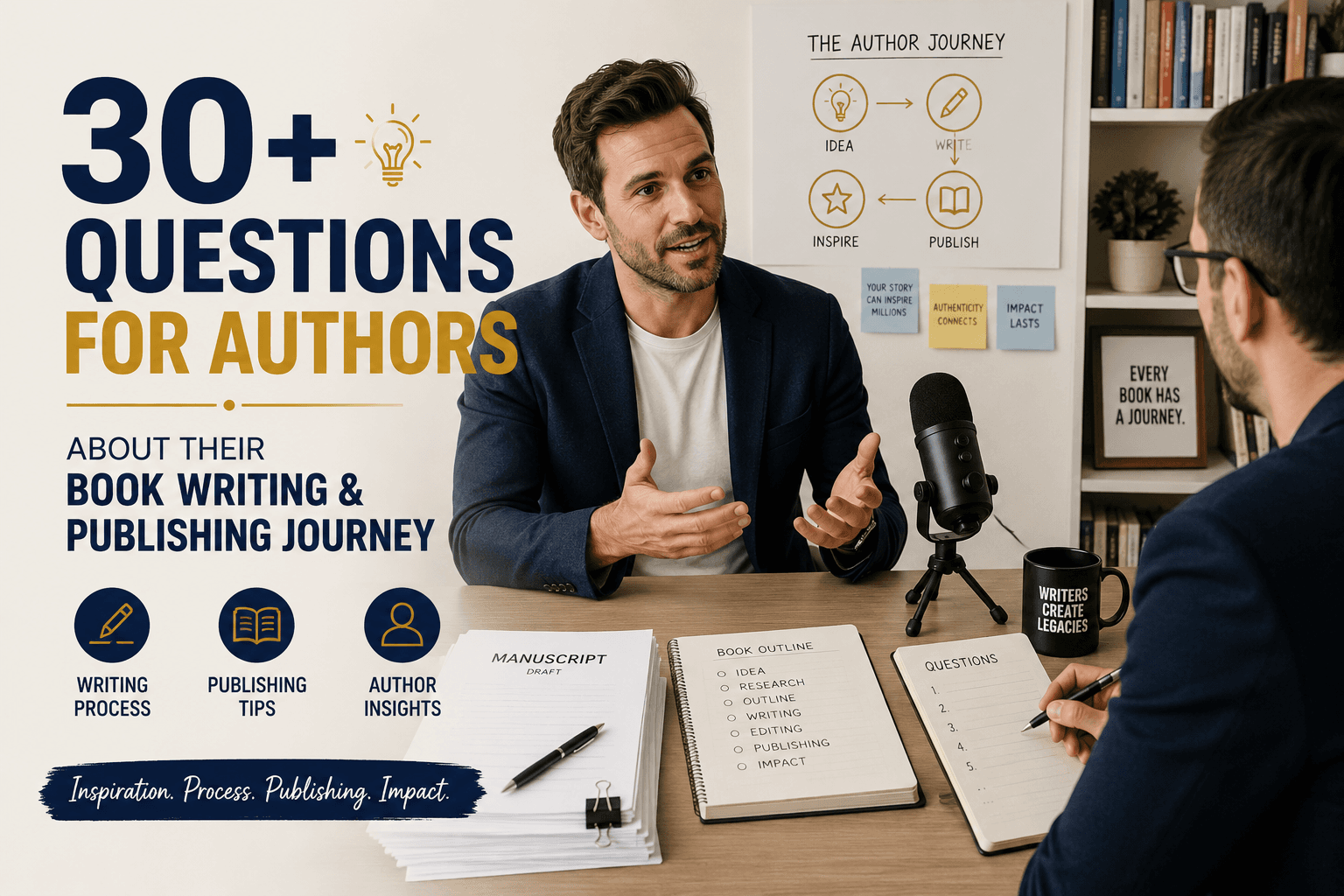
Questions About Writing and Preparing Your Book
This question seems simple, but it shapes your entire direction. Some authors write to inspire readers, others to share knowledge, and many use books to grow their personal or professional brand. Your purpose affects your tone, structure, and publishing goals throughout the book-writing experience.
Understanding your audience helps you write with clarity. A business audience expects different content than fiction readers or parents searching for educational books.
Readers have endless options today, as bookshelves are filled with great narratives at every turn. That's why you need to differentiate yourself with something signature. Identify your unique perspective. That clarity of perspective makes your book unique and gives it a stronger market position during the writing and publishing process.
The book market is different; some authors freehand their book and follow the "go with the flow" approach. These writers write freely without strict timelines. Meanwhile, other authors rely on detailed outlines. Outlining can help maintain consistency and reduce editing challenges later.
The length of a book can vary. It depends on genre, audience expectations, and your publishing goals. A business book may perform well at 30,000 words, but fantasy novels often need to be longer and more descriptive.
Many aspiring authors think of editing as skippable; it isn't. It is important for the quality and integrity of your book. Editing improves structure, grammar, readability, and overall professionalism. High-quality book editing and publishing support can dramatically improve the reader experience.
It depends on what you want. Not all authors want sleepless nights writing, revising, and rewriting. That's why such services exist; if you lack time or prefer not to handle the full write-up, professional ghostwriting and publishing can be a strong solution.
Most successful writers publishing back-to-back work tend to have one thing in common: organization. They build routines instead of waiting for motivation. Consistent writing habits are often more important than inspiration.
Rushing the process, skipping editing, and ignoring marketing are among the most common challenges in book publishing today.
Questions About Publishing Options
The publishing process typically includes:
- Book writing
- Professional editing
- Iterative proofreading
- Consistent formatting
- Visually Prompting cover design
- ISBN registration
- Book distribution setup
- Marketing preparation
Research, professional guidance, and learning from experienced publishers are all valuable. Many first-time authors benefit from full-service publishing assistance.
Invest time to decide where you stand in traditional vs. self-publishing. Traditional publishing offers industry credibility but less control, while self-publishing gives authors ownership and often faster timelines.
Many new writers overlook legalities such as publishing rights and ownership. Familiarize yourself with who controls distribution, royalties, and future adaptations before signing contracts.
Yes. Copyright documentation in writing reduces ambiguity, protects your intellectual property, and supports clear legal ownership.
Readers expect professional layouts. Proper formatting makes your book look polished on reading devices and in print. Even when self-publishing, reliable formatting and publishing help is worth considering.
Readers often judge books by visual appeal—especially online. Strong book cover design can support more clicks, sales, and traffic.
An ISBN identifies your book globally and helps bookstores and libraries track it properly.
Good publishing packages usually include editing, formatting, cover design, distribution support, and publishing consultation—without hidden fees.
Questions About Amazon and Digital Publishing
Amazon offers credibility through global reach, easy accessibility, and beginner-friendly publishing tools.
Professional services may include Kindle formatting, metadata optimization, keyword setup, paperback publishing, and account management assistance.
For authors unfamiliar with Amazon's technical setup, Kindle experts can simplify uploads, formatting, and launch preparation.
Yes. Many modern authors release digital and print versions together to maximize reach.
Print-on-demand prints books when customers order them, reducing storage costs and financial risk.
Timelines depend on how many editing and revision rounds you need, formatting complexity, and marketing preparation. From manuscript to published book can take several weeks to a few months.
It can be. Many authors earn strong royalties when they combine quality writing with effective marketing.
Questions About the Marketing of the Book
Publishing is only the beginning. Successful books need ongoing promotion and reader engagement. Marketing after launch helps authors build visibility over time.
Modern readers follow personalities as much as books. Strong author branding builds trust and long-term audience loyalty.
Definitely. Many entrepreneurs use publishing to build authority, attract clients, and improve credibility.
There is no guaranteed formula, but timing, visibility, audience targeting, and consistent marketing all contribute.
A professional launch strategy increases your chances of early traction and reader reviews.
Yes. Social media helps authors connect with readers and stay visible after launch day.
Professional editing, strategic marketing, quality cover design, and consistent promotion are major success factors.
Many beginners underestimate how complex publishing is. That is why many publishing services for first-time authors exist—to guide newcomers through the full journey.
Yes. A professional website gives readers a place to learn about you, your books, and future projects.
Professional global distribution helps books reach readers across countries, bookstores, and online platforms.
The Final Verdict
FAQs
1. Can I publish my book without a publisher?
Yes, many authors successfully self-publish using online platforms and professional publishing support services.
2. How much do publishing services usually cost?
Costs vary depending on editing, formatting, design, marketing, and distribution requirements.
3. Is Amazon good for first-time authors?
Yes, Amazon remains one of the most beginner-friendly publishing platforms available.
4. How long does it take to publish a book professionally?
Most books take several weeks to a few months, depending on revisions and publishing complexity.
5. Do I still own my book after publishing it?
That depends on your contract, which is why understanding author rights is extremely important.
Author Bio:
Isabella Watson is a professional content specialist focused on book publishing and author services. She writes and reviews technical and informative content to help aspiring and seasoned authors navigate the professional publishing process. Her work focuses on quality, trust, and hassle-free creative writing.
GET FREE CONSULTATION
Recent Posts
Why Thousands of Authors Trust Berg Publisher for Professional Publishing Services?
Our Publishing Services Explained | Expert Book Publishing Services
Client Satisfaction Comes First at Berg Publisher Book Publishing Agency
Is hiring a ghostwriter from a ghostwriting agency worth it?
Why professional authors choose ghostwriting services?
Can I Hire a Ghostwriter Online to Write My Life Story?
What are eBook writing services, and how do they help businesses generate leads?
What Berg Publisher Does as a Leading Professional Book Publishing Agency?
A Guide to Understand Rights and Credits Retention in Ghostwriting Services.
Why Book Editing is More Important Than You Think?
How to Choose the Right eBook Writing Service for Your Book or Business?
Common Mistakes Authors Make Without an eBook Writing Service
How Much Do eBook Writing Services Cost?
Professional eBook Writing, Ghostwriting and Editing Services for Authors
Best Book Publishing Agencies for Aspiring Authors 2026
Manuscript getting rejected again and again?: 2026 best book editing service
Explore the top book marketing services: Self-book publishing authors 2026
10 major benefits of hiring fiction ghostwriting services for your novel
How to design a professional book cover that sells in 2026
How to Hire a Fiction Ghostwriter for Your Novel
How to Choose a Book Publishing Agency for International Distribution?
How Book Publishing Agencies Choose Which Manuscripts to Publish?
The Day-to-Day Workflow of a Professional Book Publishing Agency?
How Editors at a Book Publishing Agency Shape Your Manuscript into a Bestseller?
AI vs human ghostwriters: Which is best for writing books in 2026?| ghostwriting services
What Most Authors Don't Know About Book Publishing Agency Submission Processes?
AI Ghostwriting in 2026: How Human Ghostwriters Still Add Value
Ghostwriting Services | Best AI Tools for Writing Books in 2026
Behind the Scenes: How Agencies Decide Marketing Budgets for Books?
How a Book Publishing Agency Evaluates Manuscript Potential (2026 Guide)
Do AI tools beat human writers?| Book publishing services explained
Book Publishing Service Explain, Will AI Replace Authors?
10 Reasons to Hire a Professional eBook Writer in 2026
30+ Questions to Ask an Author About Their Book (With Answer Guides)
How to Write a Book Without Typing
How Book Publishing Services Help Veterans Share Their War Stories?
How Agencies Handle Multiple Authors Efficiently?
How Book Publishing Agency Experts Predict Reader Trends?
Why Book Editing Services and Editors Matter in the AI-Driven Publishing Era?
Pricing Secrets: How a Book Publishing Agency Decides Author Royalties?
How does a Book Marketing Agency Handle Sci-Fi, Fantasy, and Romance Books Differently?
How to Negotiate the Best Deal with a Book Publishing Agency (2026 Guide)
I Published My First Book at 60: Guide to Book Publishing Services for First-Time Authors
The Real Cost of Publishing a Book via Book Publishing Services in 2026?
30+ Questions Every Author Should Ask Before Using Book Publishing Services
Hire an EBook Writer to Build Brand Authority
Why Book Launches Get Delayed (and How to Avoid It)
Is Your Book Ready to Be Published? Check Now
Manuscript to Published Book: A Step-by-Step Guide
Famous CEO Books That Were Written by Ghostwriters
Common Publishing Mistakes Every Author Should Avoid
Legal Requirements for Publishing a Book in the USA
What Successful Self-Published Authors Do Differently
Will Your Book Ever Pay You Back? Here's the Truth
Choosing the Right Genre and Category for Your Book
Hidden Contract Clauses Authors Miss in Book Deals
Best Fiction Writing Services | Berg Publishers
Who Owns a Ghostwritten Book? | Berg Publishers
Book Publishing Services That Don't Hide the Price
Ghostwriter vs. Co-Author: Which One Is Right? | Berg
How CEOs Become Published Authors | Berg Publishers
Amazon Publishing vs. Berg Publishers: Which Wins?
How to Vet a Ghostwriter: A 10-Point Checklist
Vanity Press Warning: 12 Red Flags Before You Sign
eBook Writing Service: How to Choose the Right One
Why Ebooks Fail: 8 Honest Reasons You Can't Ignore
5 Reasons to Hire an Editor Before Self-Publishing a Book
How to Tell If Your Book Is Competing Against an AI Knockoff on Amazon
How to Promote an Ebook After Publishing: Beyond Amazon and Your Website
How to Sell Short Stories on Amazon Kindle: Tips and Tricks for New Authors
8 Podcast Recommendations for Writers and Self-Publishers (2026 Edition)
An Interview with USA Today Bestselling Author Kelly
How Do I Publish a Book for Free on Amazon Kindle Direct Publishing (KDP)? The Complete Step-by-Step Process
AI and Book Publishing in 2026: 4 Changes Every Author Should Know
Which Fonts and Font Sizes Are Best for Your Book's Interior Formatting?
Business Ebook vs Amazon Ebook: Two Completely Different Goals
Cost vs Value: Is a Professional Agency Worth It for Your Book?
15 Creative Book Marketing Ideas for Self-Published Authors (2026 Guide)
2026 Publishing Trends: What Authors, Editors & Publishers Must Know
Internal vs External Conflict: How They Are Used in a Story
Book Royalty Calculator: KDP vs IngramSpark vs Draft2Digital (Exact Math)
Best Publishing Platforms 2026 to 2027: The Ultimate Comparison Guide
AI Book Cover Design: Legal Risks Every US Author Must Know in 2026
How to Hire and Work with a New York Ghostwriting Company
How Much Do Ghostwriters Cost in New York? A Complete NYC Pricing Guide for 2026
The Ultimate Guide on How to Write a Book in 2026
Tips for Authors Writing in Less Popular or Emerging Genres
Top 10 Best Selling Authors of All Time | Book Publishing

We create books that connect with audiences. From the initial outline to publication and marketing, we support our clients throughout the entire process.
SERVICES
- Fiction Ghostwriting
- Non-Fiction Ghostwriting
- Book Editing
- Book Printing
- Book Marketing
- Audiobook Publishing
- Hybrid Publishing
- IngramSpark Publishing
- ISBN and Copyright Registration
- Book Cover Design
- eBook Writing
- Self-Publishing for Tech Founders
- Amazon Publishing
- Self-Publishing vs Traditional Publishing
- Book Publishing Timeline & Process
- Book Publishing Cost USA
- Author Success Stories & Case Studies
- Biography Writing
- Novel Writing