How to Promote an Ebook After Publishing: Beyond Amazon and Your Website
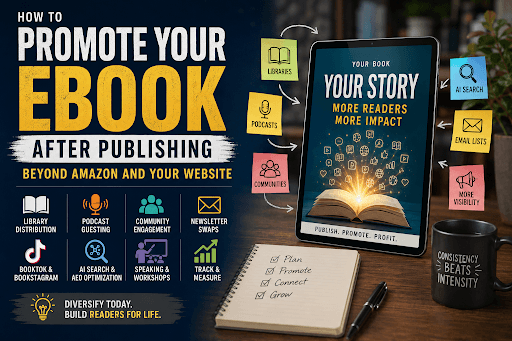
Why "Beyond Amazon" Promotion Matters
- Algorithm dependence: A ranking dip during launch week can bury your book for months.
- No reader relationship: Amazon owns the customer data, not you.
- Discovery ceiling: Readers who don't shop on Amazon — library users, audiobook listeners, and community-driven buyers — never see you.
- Price wars: Competing on Amazon often means competing on price. Off-platform channels let you compete on authority and connection.
The Overlooked Channels: A Quick Comparison
| Channel | Cost | Effort | Best For | Timeline to Results |
|---|---|---|---|---|
| Library distribution (OverDrive/Hoopla) | Free–Low | Low | Fiction, self-help, memoir | 2–6 months |
| Podcast guesting | Free | Medium | Nonfiction, expert authors | 1–3 months |
| Niche communities (Reddit, Discord, Facebook) | Free | Medium-High | Genre fiction, hobbies | Ongoing |
| Email newsletter swaps | Free | Low | Authors with any list size | 2–4 weeks |
| BookTok & Bookstagram outreach | Free–Medium | Medium | YA, romance, fantasy, thrillers | 1–2 months |
| Answer engine optimization (AEO/GEO) | Free | Medium | Nonfiction, how-to guides | 3–6 months |
| Speaking & workshops | Free–Paid | High | Business, education titles | 1–3 months |
1. Get Your Ebook Into Digital Libraries
- Distribute through an aggregator like Draft2Digital, PublishDrive, or StreetLib, which push your title into library catalogs.
- Price your library edition slightly higher than retail (libraries expect this and budget for it).
- Email acquisition librarians directly. A short pitch with your book's genre, reviews, and local relevance works surprisingly well, especially with libraries in your own city.
2. Turn Your Book Into a Podcast Tour
- Tier 1 — Niche shows (under 5,000 listeners): Easy to book, highly engaged audiences. Start here to sharpen your talking points.
- Tier 2 — Mid-size genre shows: Pitch with a specific episode angle, not "I wrote a book."
- Tier 3 — Flagship shows: Approach only after you have clips from smaller appearances to prove you're a good guest.
3. Master Community-Led Promotion (Without Getting Banned)
- Reddit: Subreddits like r/Fantasy, r/suggestmeabook, and genre-specific communities allow author AMAs and self-promo threads on designated days. Read each subreddit's rules first.
- Discord: Book club and writing servers often host author Q&A events. Offer free copies to moderators to organize a discussion.
- Goodreads groups: Join genre groups, participate in reading challenges, and run a Goodreads giveaway timed to a price promotion.
4. Optimize for AI Answer Engines (The Channel Nobody's Talking About)
- Get cited in list articles: AI engines pull heavily from "best books" roundups on established blogs. Pitch guest posts and inclusion requests to sites that publish these lists.
- Structure your content for answers: Publish Q&A-style articles on your site that directly answer questions your book solves. Use clear headings and concise, quotable answers.
- Build consistent entity signals: Make sure your author name, book title, and topic appear together across Goodreads, Wikipedia-adjacent sources, interviews, and directories. AI models recommend books they "see" repeatedly in trusted contexts.
- Add FAQ and Book schema markup to your book's landing page so search engines and AI crawlers can parse it cleanly.
5. Repurpose Your Ebook Into a Content Engine
- Slice chapters into LinkedIn carousels or newsletter essays (great for business nonfiction).
- Record yourself reading a chapter and release it as a free audio sample on YouTube and Spotify.
- Turn frameworks or checklists from the book into downloadable lead magnets that require an email address.
- Create quote graphics for Pinterest — a criminally underused, search-driven platform where book content has a long shelf life.
6. Partner Channels: Newsletter Swaps, Bundles, and Bookstore Consignment
- Newsletter swaps: Trade recommendations with authors in your genre via services like StoryOrigin or BookFunnel. Even a 500-subscriber list converts when the audience matches.
- Promo bundles: Group promotions (multi-author giveaways, BookFunnel bundles) can add hundreds of engaged subscribers in a week.
- Local and indie bookstores: Many accept print-on-demand copies on consignment and will host signing events, providing offline visibility that feeds online sales.
- Corporate and bulk sales: Nonfiction authors can pitch companies, associations, and conferences on bulk orders as training or event gifts. One deal can outsell a month of retail.
7. Track What's Working
- UTM-tagged links for every channel so Google Analytics shows true sources.
- Unique landing pages or discount codes per podcast or partnership.
- Retailer dashboards + aggregator reports reviewed monthly to spot which platforms deserve more effort.
The Long Game: Promotion Is a System, Not a Sprint
FAQs
1. How long after publishing should I keep promoting my ebook?
Indefinitely but strategically. The first 90 days establish momentum; after that, shift to evergreen channels like library distribution, SEO content, and AI answer-engine visibility that generate discovery without daily effort.
2. Can I promote my ebook in libraries if I published exclusively on Amazon KDP?
Not while enrolled in KDP Select, which requires ebook exclusivity. You'd need to leave Select (or wait out the 90-day term) and distribute "wide" through an aggregator to reach OverDrive, Hoopla, and other library platforms.
3. Is paid advertising necessary to promote an ebook after launch?
No. Ads accelerate results but aren't required. Organic channels, such as podcast guesting, community engagement, newsletter swaps, and library distribution, can sustain sales, especially for authors building a long-term backlist.
4. How many reviews do I need before pitching podcasts or influencers?
There's no magic number, but 15–25 genuine reviews signal credibility. If you're below that, run a Goodreads giveaway or offer review copies through your email list first.
5. What's the biggest ebook promotion mistake authors make?
Treating launch week as the entire campaign. Sales data consistently shows that books promoted across multiple channels for 6–12 months outperform launch-only titles — often by multiples.
Author Bio:
Isabella Watson is a professional content specialist focused on book publishing and author services. She writes and reviews technical and informative content to help aspiring and seasoned authors navigate the professional publishing process. Her work focuses on quality, trust, and hassle-free creative writing.
GET FREE CONSULTATION
Recent Posts
Why Thousands of Authors Trust Berg Publisher for Professional Publishing Services?
Our Publishing Services Explained | Expert Book Publishing Services
Client Satisfaction Comes First at Berg Publisher Book Publishing Agency
Is hiring a ghostwriter from a ghostwriting agency worth it?
Why professional authors choose ghostwriting services?
Can I Hire a Ghostwriter Online to Write My Life Story?
What are eBook writing services, and how do they help businesses generate leads?
What Berg Publisher Does as a Leading Professional Book Publishing Agency?
A Guide to Understand Rights and Credits Retention in Ghostwriting Services.
Why Book Editing is More Important Than You Think?
How to Choose the Right eBook Writing Service for Your Book or Business?
Common Mistakes Authors Make Without an eBook Writing Service
How Much Do eBook Writing Services Cost?
Professional eBook Writing, Ghostwriting and Editing Services for Authors
Best Book Publishing Agencies for Aspiring Authors 2026
Manuscript getting rejected again and again?: 2026 best book editing service
Explore the top book marketing services: Self-book publishing authors 2026
10 major benefits of hiring fiction ghostwriting services for your novel
How to design a professional book cover that sells in 2026
How to Hire a Fiction Ghostwriter for Your Novel
How to Choose a Book Publishing Agency for International Distribution?
How Book Publishing Agencies Choose Which Manuscripts to Publish?
The Day-to-Day Workflow of a Professional Book Publishing Agency?
How Editors at a Book Publishing Agency Shape Your Manuscript into a Bestseller?
AI vs human ghostwriters: Which is best for writing books in 2026?| ghostwriting services
What Most Authors Don't Know About Book Publishing Agency Submission Processes?
AI Ghostwriting in 2026: How Human Ghostwriters Still Add Value
Ghostwriting Services | Best AI Tools for Writing Books in 2026
Behind the Scenes: How Agencies Decide Marketing Budgets for Books?
How a Book Publishing Agency Evaluates Manuscript Potential (2026 Guide)
Do AI tools beat human writers?| Book publishing services explained
Book Publishing Service Explain, Will AI Replace Authors?
10 Reasons to Hire a Professional eBook Writer in 2026
30+ Questions to Ask an Author About Their Book (With Answer Guides)
How to Write a Book Without Typing
How Book Publishing Services Help Veterans Share Their War Stories?
How Agencies Handle Multiple Authors Efficiently?
How Book Publishing Agency Experts Predict Reader Trends?
Why Book Editing Services and Editors Matter in the AI-Driven Publishing Era?
Pricing Secrets: How a Book Publishing Agency Decides Author Royalties?
How does a Book Marketing Agency Handle Sci-Fi, Fantasy, and Romance Books Differently?
How to Negotiate the Best Deal with a Book Publishing Agency (2026 Guide)
I Published My First Book at 60: Guide to Book Publishing Services for First-Time Authors
The Real Cost of Publishing a Book via Book Publishing Services in 2026?
30+ Questions Every Author Should Ask Before Using Book Publishing Services
Hire an EBook Writer to Build Brand Authority
Poetry Publishing: Why It Needs Different Treatment
Why Book Launches Get Delayed (and How to Avoid It)
Is Your Book Ready to Be Published? Check Now
Manuscript to Published Book: A Step-by-Step Guide
Famous CEO Books That Were Written by Ghostwriters
Common Publishing Mistakes Every Author Should Avoid
Legal Requirements for Publishing a Book in the USA
What Successful Self-Published Authors Do Differently
Will Your Book Ever Pay You Back? Here's the Truth
Choosing the Right Genre and Category for Your Book
Hidden Contract Clauses Authors Miss in Book Deals
Best Fiction Writing Services | Berg Publishers
Who Owns a Ghostwritten Book? | Berg Publishers
Book Publishing Services That Don't Hide the Price
Ghostwriter vs. Co-Author: Which One Is Right? | Berg
How CEOs Become Published Authors | Berg Publishers
Amazon Publishing vs. Berg Publishers: Which Wins?
How to Vet a Ghostwriter: A 10-Point Checklist
Vanity Press Warning: 12 Red Flags Before You Sign
eBook Writing Service: How to Choose the Right One
Why Ebooks Fail: 8 Honest Reasons You Can't Ignore
5 Reasons to Hire an Editor Before Self-Publishing a Book
How to Tell If Your Book Is Competing Against an AI Knockoff on Amazon
How to Promote an Ebook After Publishing: Beyond Amazon and Your Website
How to Sell Short Stories on Amazon Kindle: Tips and Tricks for New Authors
8 Podcast Recommendations for Writers and Self-Publishers (2026 Edition)
An Interview with USA Today Bestselling Author Kelly
How Do I Publish a Book for Free on Amazon Kindle Direct Publishing (KDP)? The Complete Step-by-Step Process
AI and Book Publishing in 2026: 4 Changes Every Author Should Know
Which Fonts and Font Sizes Are Best for Your Book's Interior Formatting?
Business Ebook vs Amazon Ebook: Two Completely Different Goals
Cost vs Value: Is a Professional Agency Worth It for Your Book?
15 Creative Book Marketing Ideas for Self-Published Authors (2026 Guide)
2026 Publishing Trends: What Authors, Editors & Publishers Must Know
Internal vs External Conflict: How They Are Used in a Story
Book Royalty Calculator: KDP vs IngramSpark vs Draft2Digital (Exact Math)
Best Publishing Platforms 2026 to 2027: The Ultimate Comparison Guide
AI Book Cover Design: Legal Risks Every US Author Must Know in 2026
How to Hire and Work with a New York Ghostwriting Company
How Much Do Ghostwriters Cost in New York? A Complete NYC Pricing Guide for 2026
The Ultimate Guide on How to Write a Book in 2026
Tips for Authors Writing in Less Popular or Emerging Genres
Top 10 Best Selling Authors of All Time | Book Publishing

We create books that connect with audiences. From the initial outline to publication and marketing, we support our clients throughout the entire process.
SERVICES
- Fiction Ghostwriting
- Non-Fiction Ghostwriting
- Book Editing
- Book Printing
- Book Marketing
- Audiobook Publishing
- Hybrid Publishing
- IngramSpark Publishing
- ISBN and Copyright Registration
- Book Cover Design
- eBook Writing
- Self-Publishing for Tech Founders
- Amazon Publishing
- Self-Publishing vs Traditional Publishing
- Book Publishing Timeline & Process
- Book Publishing Cost USA
- Author Success Stories & Case Studies
- Biography Writing
- Novel Writing