Manuscript to Published Book: A Step-by-Step Guide
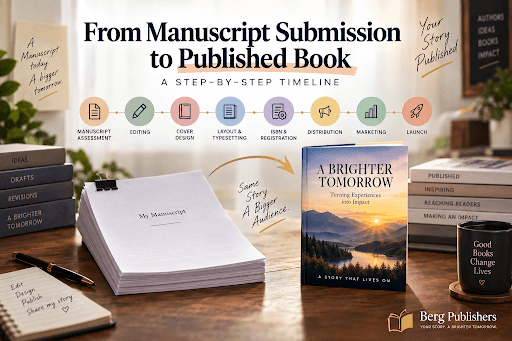
First, Understand the Two Publishing Paths
| Path | Total Timeline (Manuscript to Published) | Best For |
|---|---|---|
| Traditional Publishing | 18 – 36 months | Authors seeking major retail distribution and prestige |
| Hybrid / Assisted Publishing | 6 – 12 months | Authors who want professional quality with more control |
| Self-Publishing | 1 – 3 months | Authors ready to move fast with a polished manuscript |
The Full Timeline: Step by Step
Step 1: Manuscript Assessment (Weeks 1–2)
- Overall structure and pacing
- Chapter organization and flow
- Tone and audience alignment
- Developmental gaps or redundancies
Step 2: Developmental Editing (Weeks 3–8)
- Does the book's structure serve the reader?
- Are the arguments or narratives logically sequenced?
- Is the voice consistent throughout?
- Are there missing sections that would strengthen the book?
Step 3: Copy Editing (Weeks 9–11)
- Grammar, punctuation, and syntax
- Consistency in style, terminology, and tense
- Sentence clarity and readability
- Factual inconsistencies
Step 4: Proofreading (Week 12)
- Typographical errors
- Formatting inconsistencies
- Page break issues
- Header and footer errors
Step 5: Cover Design (Weeks 8–13, runs parallel to editing)
- Genre-appropriate visual concept development
- Typography and color palette selection
- Front cover, back cover, and spine design
- Multiple revision rounds with the author
- Final files prepared for both print and digital formats
Step 6: Interior Layout and Typesetting (Weeks 13–15)
- Chapter headings and subheadings
- Font selection, spacing, and margins
- Page numbering and headers
- Image placement (if applicable)
- Table of contents generation
Step 7: ISBN, Copyright, and Legal Registration (Week 14–15)
- ISBN assignment — Your book needs a unique identifier for every format (print, eBook, hardcover each get their own)
- Copyright page — Legally formatted for U.S. copyright standards
- Library of Congress registration — Required for library distribution and adds credibility
- Barcode generation — Required for retail and print distribution
Step 8: Distribution Setup (Weeks 15–17)
- Upload to Amazon KDP (print and Kindle)
- IngramSpark setup for bookstore and library distribution
- Barnes & Noble and Apple Books listing
- Google Play Books registration
- Wholesale pricing and discount structure setup
Step 9: Pre-Launch Marketing Preparation (Weeks 14–18, parallel track)
- Author website or landing page setup
- Advance Review Copies (ARCs) sent to readers and reviewers 4–6 weeks before launch
- Amazon Author Central page setup and optimization
- Email list building prior to launch
- Social media content prepared and scheduled
- Press release drafted and distributed
Step 10: Launch Day and Post-Launch (Week 18–20+)
- Coordinate all distribution channels to go live simultaneously
- Execute pre-planned marketing pushes
- Engage with early reviewers and readers
- Monitor sales data across platforms
- Begin post-launch promotional activities (podcast appearances, speaking engagements, press interviews)
The Complete Timeline at a Glance
| Stage | Timeline | Who Handles It |
|---|---|---|
| Manuscript Assessment | Weeks 1–2 | Publishing team |
| Developmental Editing | Weeks 3–8 | Developmental editor |
| Copy Editing | Weeks 9–11 | Copy editor |
| Cover Design | Weeks 8–13 | Cover designer |
| Proofreading | Week 12 | Proofreader |
| Interior Layout | Weeks 13–15 | Typesetter |
| ISBN & Legal Setup | Weeks 14–15 | Publishing team |
| Distribution Setup | Weeks 15–17 | Publishing team |
| Pre-Launch Marketing | Weeks 14–18 | Marketing team |
| Launch & Post-Launch | Week 18+ | Author + publishing team |
What Causes Timelines to Blow Up (And How to Avoid It)
- Author unavailability during revision rounds — If it takes three weeks to get feedback on an edited chapter, the timeline slips by three weeks. Simple as that.
- Skipping developmental editing — Discovering structural problems during copy editing means going backward. That adds months.
- Last-minute cover change requests — Changing direction on the cover after two rounds of approval creates costly delays in both design and layout.
- Underestimating distribution setup — Rushing this step leads to errors in metadata that suppress your book in search results.
FAQs
1. How long does the publishing process realistically take from a finished manuscript?
For a professionally assisted or hybrid publishing path, expect six to twelve months from finished manuscript to published book. Traditional publishing with a major house typically adds significantly more time, anywhere from eighteen to thirty-six months, due to agent querying, acquisition committees, and publisher release scheduling.
2. Can the timeline be shortened without sacrificing quality?
Yes, to a point. Running design and editing simultaneously saves four to six weeks. Having an author who responds promptly during revision rounds saves more. But cutting corners on editing, skipping developmental editing, or rushing proofreading never saves time in the long run. Books that skip these steps typically need expensive corrections after publication.
3. What's the one stage first-time authors most underestimate?
Distribution setup. Authors focus heavily on writing and design, which makes sense, but then rush through distribution, metadata, and pricing decisions in a single afternoon. These decisions directly affect discoverability on Amazon, bookstore eligibility, and library listings. Getting them right takes careful attention.
4. Does Berg Publishers handle the entire process or just parts of it?
Berg Publishers offers full-service support from manuscript assessment through post-launch marketing one team, one relationship, every stage covered. Authors who want to stay involved at every step can. Authors who want to hand off the process and receive a finished, published book can do that too.
5. When should I start marketing before or after the book is finished?
Before. Ideally, your author platform, email list, and social media presence should be building while your book is in editing. By the time your cover is designed and your ARC copies go out, you should already have an audience ready to receive them. Starting marketing on launch day is starting six months too late.
Author Bio:
Isabella Watson is a professional content specialist focused on book publishing and author services. She writes and reviews technical and informative content to help aspiring and seasoned authors navigate the professional publishing process. Her work focuses on quality, trust, and hassle-free creative writing.
GET FREE CONSULTATION
Recent Posts
Why Thousands of Authors Trust Berg Publisher for Professional Publishing Services?
Our Publishing Services Explained | Expert Book Publishing Services
Client Satisfaction Comes First at Berg Publisher Book Publishing Agency
Is hiring a ghostwriter from a ghostwriting agency worth it?
Why professional authors choose ghostwriting services?
Can I Hire a Ghostwriter Online to Write My Life Story?
What are eBook writing services, and how do they help businesses generate leads?
What Berg Publisher Does as a Leading Professional Book Publishing Agency?
A Guide to Understand Rights and Credits Retention in Ghostwriting Services.
Why Book Editing is More Important Than You Think?
How to Choose the Right eBook Writing Service for Your Book or Business?
Common Mistakes Authors Make Without an eBook Writing Service
How Much Do eBook Writing Services Cost?
Professional eBook Writing, Ghostwriting and Editing Services for Authors
Best Book Publishing Agencies for Aspiring Authors 2026
Manuscript getting rejected again and again?: 2026 best book editing service
Explore the top book marketing services: Self-book publishing authors 2026
10 major benefits of hiring fiction ghostwriting services for your novel
How to design a professional book cover that sells in 2026
How to Hire a Fiction Ghostwriter for Your Novel
How to Choose a Book Publishing Agency for International Distribution?
How Book Publishing Agencies Choose Which Manuscripts to Publish?
The Day-to-Day Workflow of a Professional Book Publishing Agency?
How Editors at a Book Publishing Agency Shape Your Manuscript into a Bestseller?
AI vs human ghostwriters: Which is best for writing books in 2026?| ghostwriting services
What Most Authors Don't Know About Book Publishing Agency Submission Processes?
AI Ghostwriting in 2026: How Human Ghostwriters Still Add Value
Ghostwriting Services | Best AI Tools for Writing Books in 2026
Behind the Scenes: How Agencies Decide Marketing Budgets for Books?
How a Book Publishing Agency Evaluates Manuscript Potential (2026 Guide)
Do AI tools beat human writers?| Book publishing services explained
Book Publishing Service Explain, Will AI Replace Authors?
10 Reasons to Hire a Professional eBook Writer in 2026
30+ Questions to Ask an Author About Their Book (With Answer Guides)
How to Write a Book Without Typing
How Book Publishing Services Help Veterans Share Their War Stories?
How Agencies Handle Multiple Authors Efficiently?
How Book Publishing Agency Experts Predict Reader Trends?
Why Book Editing Services and Editors Matter in the AI-Driven Publishing Era?
Pricing Secrets: How a Book Publishing Agency Decides Author Royalties?
How does a Book Marketing Agency Handle Sci-Fi, Fantasy, and Romance Books Differently?
How to Negotiate the Best Deal with a Book Publishing Agency (2026 Guide)
I Published My First Book at 60: Guide to Book Publishing Services for First-Time Authors
The Real Cost of Publishing a Book via Book Publishing Services in 2026?
30+ Questions Every Author Should Ask Before Using Book Publishing Services
Hire an EBook Writer to Build Brand Authority
Manuscript to Published Book: A Step-by-Step Guide
Famous CEO Books That Were Written by Ghostwriters
Common Publishing Mistakes Every Author Should Avoid
Legal Requirements for Publishing a Book in the USA
What Successful Self-Published Authors Do Differently
Will Your Book Ever Pay You Back? Here's the Truth
Choosing the Right Genre and Category for Your Book
Hidden Contract Clauses Authors Miss in Book Deals
Best Fiction Writing Services | Berg Publishers
Who Owns a Ghostwritten Book? | Berg Publishers
Book Publishing Services That Don't Hide the Price
Ghostwriter vs. Co-Author: Which One Is Right? | Berg
How CEOs Become Published Authors | Berg Publishers
Amazon Publishing vs. Berg Publishers: Which Wins?
How to Vet a Ghostwriter: A 10-Point Checklist
Vanity Press Warning: 12 Red Flags Before You Sign
eBook Writing Service: How to Choose the Right One
Why Ebooks Fail: 8 Honest Reasons You Can't Ignore
5 Reasons to Hire an Editor Before Self-Publishing a Book
How to Tell If Your Book Is Competing Against an AI Knockoff on Amazon
How to Promote an Ebook After Publishing: Beyond Amazon and Your Website
How to Sell Short Stories on Amazon Kindle: Tips and Tricks for New Authors
8 Podcast Recommendations for Writers and Self-Publishers (2026 Edition)
An Interview with USA Today Bestselling Author Kelly
How Do I Publish a Book for Free on Amazon Kindle Direct Publishing (KDP)? The Complete Step-by-Step Process
AI and Book Publishing in 2026: 4 Changes Every Author Should Know
Which Fonts and Font Sizes Are Best for Your Book's Interior Formatting?
Business Ebook vs Amazon Ebook: Two Completely Different Goals
Cost vs Value: Is a Professional Agency Worth It for Your Book?
15 Creative Book Marketing Ideas for Self-Published Authors (2026 Guide)
2026 Publishing Trends: What Authors, Editors & Publishers Must Know
Internal vs External Conflict: How They Are Used in a Story
Book Royalty Calculator: KDP vs IngramSpark vs Draft2Digital (Exact Math)
Best Publishing Platforms 2026 to 2027: The Ultimate Comparison Guide
AI Book Cover Design: Legal Risks Every US Author Must Know in 2026
How to Hire and Work with a New York Ghostwriting Company
How Much Do Ghostwriters Cost in New York? A Complete NYC Pricing Guide for 2026
The Ultimate Guide on How to Write a Book in 2026
Tips for Authors Writing in Less Popular or Emerging Genres
Top 10 Best Selling Authors of All Time | Book Publishing

We create books that connect with audiences. From the initial outline to publication and marketing, we support our clients throughout the entire process.
SERVICES
- Fiction Ghostwriting
- Non-Fiction Ghostwriting
- Book Editing
- Book Printing
- Book Marketing
- Book Cover Design
- eBook Writing
- Self-Publishing for Tech Founders
- Amazon Publishing
- Self-Publishing vs Traditional Publishing
- Book Publishing Timeline & Process
- Book Publishing Cost USA
- Author Success Stories & Case Studies
- Biography Writing
- Novel Writing