30+ Questions to Ask an Author About Their Book (With Answer Guides)
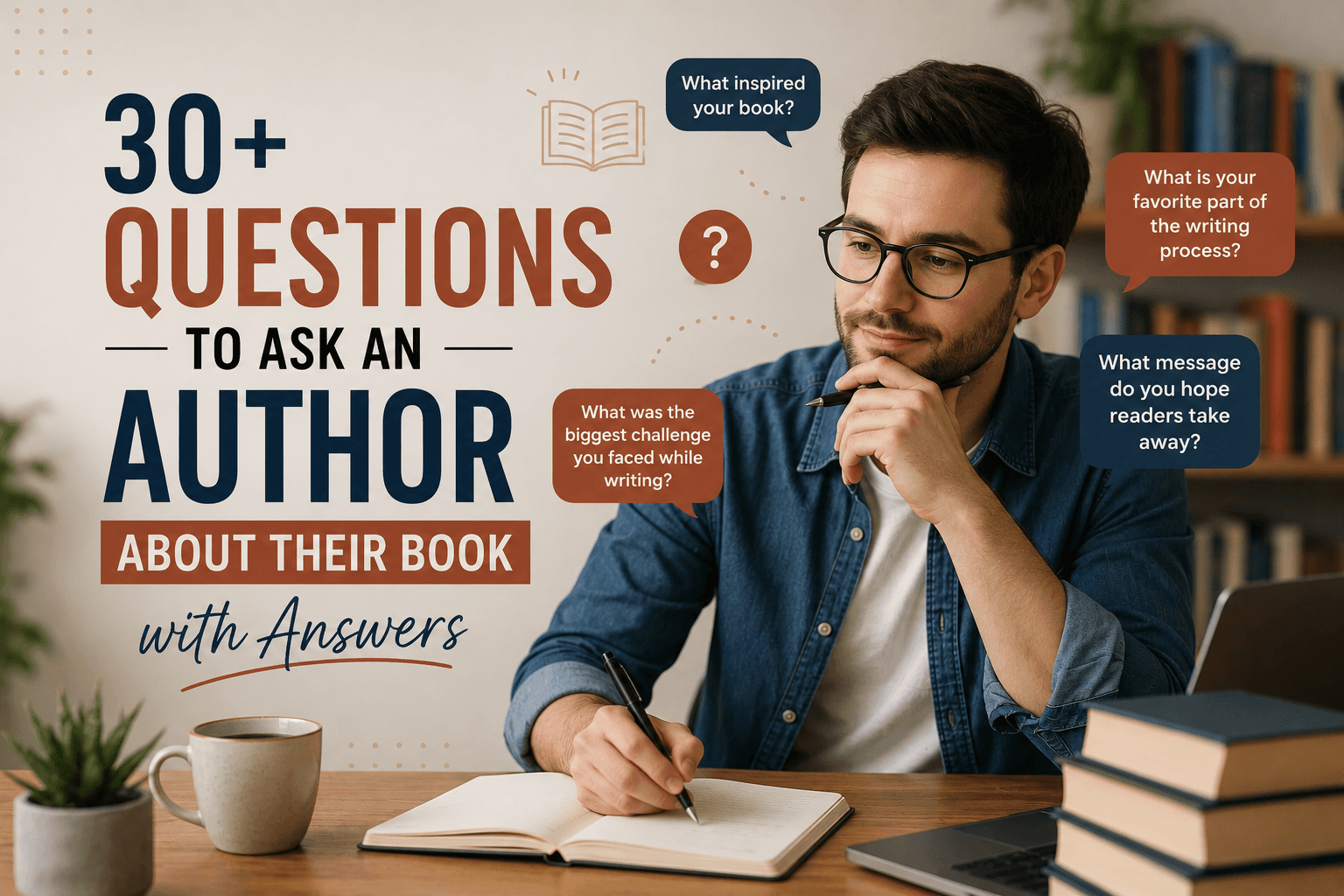
1. Questions About Book Inspiration and Motivation
- What inspired you to write this book? Opens the door to personal backstory and passion.
- Was there a specific moment when the idea clicked? Reveals the origin story readers love.
- Who did you write this book for? Clarifies intended audience and authorial intent.
- What did you hope readers would feel or do after finishing it? Surfaces the deeper purpose driving the work.
2. Understanding the Writing Process
- What does your daily writing routine look like?
- How long did this book take from concept to completion?
- Did you outline first, or discover the story as you wrote?
- What was the hardest chapter or section to write, and why?
3. Character Development Insights
- How did you decide on your protagonist's core flaw?
- Are any characters based on real people in your life?
- Did any character surprise you by evolving beyond your original vision?
- How do you balance backstory with forward momentum?
4. Themes and Messages
- What central theme drives your book? Authors rarely write in a vacuum; most are processing real ideas about identity, justice, or belonging.
- Did your message evolve during writing? A common pattern is that themes deepen unexpectedly once characters take shape.
- What do you hope readers take away? This distinguishes entertainment from transformation.
5. Publishing and Marketing Strategy
- Did you self-publish or pursue traditional publishing, and why?
- What marketing tactics drove the most visibility for your book?
- How did you build an audience before launch?
6. Using Ebook Writing Services
- Collaboration scope — Understanding how much creative input the author retained
- Quality control — What review and revision processes were in place
- Timeline efficiency — Whether professional assistance accelerated publication
- Cost vs. value — How authors evaluated return on their investment
Limitations and Considerations
- Answers may be curated — Authors naturally highlight successes over failures, so follow-up questions often yield more candid insight.
- Ghostwritten books vary widely in quality — Professional collaboration outcomes depend heavily on communication, briefing depth, and service selection.
- Market conditions shift quickly — According to AAP data analyzed by Jane Friedman, meaning context matters when interpreting an author's commercial results.
- One experience does not generalize — A single author's publishing journey reflects their genre, audience, and timing.
Key Takeaways
- Authenticity matters — readers and interviewers alike respond to genuine creative process stories
- Collaboration is increasingly common — working with writing services does not diminish an author's vision or voice
- The ebook market continues to grow, with global ebook revenue projected to expand steadily through 2030, making authorship more relevant than ever
- Preparation separates good interviews from great ones — knowing the right questions unlocks richer, more honest answers
What Questions to Ask an Author About Their Book?
- Origin questions: What inspired the central idea, and how did it evolve?
- Process questions: How did you structure your writing routine and overcome creative blocks?
- Character/theme questions: Which character or concept challenged you most to develop?
- Audience questions: Who did you envision reading this, and did that vision shift?
- Publishing questions: What surprised you most about bringing this book to market?
What Are Some Good Questions to Ask About Books?
- What central conflict drives the narrative forward?
- How does the setting shape character decisions?
- What does the ending reveal about the author's worldview?
- Which scene most surprised you, and why?
How Does an Author Know When Their Book Is Ready to Be Published?
- Multiple revision passes have addressed structure, pacing, and clarity
- Beta readers or critique partners have provided feedback and concerns are resolved
- Professional editing has been completed
- The author can articulate the book's core value proposition clearly
How Can I Become a Good eBook Writer?
- Read widely in your genre — Understanding what works helps you develop instincts for structure and voice
- Write consistently — Regular practice sharpens clarity and reduces self-editing paralysis
- Study formatting standards — eBooks have unique readability requirements distinct from print
- Seek honest feedback — Beta readers and editors expose blind spots before publication
- Master one topic deeply — Focused expertise builds credibility and reader trust
How Would You Describe Your Experience With Self-Publishing?
- Discoverability — With millions of titles available, standing out requires consistent marketing effort
- Cover design and formatting — Professional presentation demands skills most writers do not naturally have
- Pricing strategy — Setting the wrong price can kill sales before they start
- Reader trust — Building an audience from zero takes time and persistence
Final Thoughts: Your eBook Journey Starts Here
- Strong books begin with honest, specific questions about purpose and audience
- Self-publishing rewards authors who treat writing as a professional discipline
- Many authors choose to hire professional ghostwriters to bridge skill or time gaps
FAQs
1. What should I ask an author first in an interview?
Open with inspiration and motivation — what sparked the book and who it is for — before moving to process, characters, themes, and publishing. That order builds a natural narrative arc for the conversation.
2. Is it okay to ask authors if they used a ghostwriter or writing service?
Only if they have chosen to disclose it publicly or you have cleared the question in advance. Many collaborations are confidential; focus on craft, process, and outcomes unless the author invites that topic.
3. How do ebook writing services relate to author interviews?
Authors who develop manuscripts with professional support often have clearer positioning, themes, and talking points — which can make interviews stronger. The interview still centers on their intent, choices, and reader promise.
4. How many categories of questions should a solid interview cover?
Aim to touch origin, writing process, character or argument development, themes, audience, and publishing or marketing — even briefly. Six to ten focused questions with follow-ups usually suffice for a half-hour format.
5. Where can I get help publishing or polishing my ebook?
Berg Publisher offers ebook writing, editing, design, and broader publishing support so authors can prepare both the manuscript and the messaging they will use in interviews and launch.
Author Bio:
Alex Philips is a professional content specialist focused on book publishing and author services. He writes and reviews technical and informative content to help aspiring and seasoned authors navigate the professional publishing process. His work focuses on quality, trust, and hassle-free creative writing.
GET FREE CONSULTATION
Recent Posts
Why Thousands of Authors Trust Berg Publisher for Professional Publishing Services?
Our Publishing Services Explained | Expert Book Publishing Services
Client Satisfaction Comes First at Berg Publisher Book Publishing Agency
Is hiring a ghostwriter from a ghostwriting agency worth it?
Why professional authors choose ghostwriting services?
Can I Hire a Ghostwriter Online to Write My Life Story?
What are eBook writing services, and how do they help businesses generate leads?
What Berg Publisher Does as a Leading Professional Book Publishing Agency?
A Guide to Understand Rights and Credits Retention in Ghostwriting Services.
Why Book Editing is More Important Than You Think?
How to Choose the Right eBook Writing Service for Your Book or Business?
Common Mistakes Authors Make Without an eBook Writing Service
How Much Do eBook Writing Services Cost?
Professional eBook Writing, Ghostwriting and Editing Services for Authors
Best Book Publishing Agencies for Aspiring Authors 2026
Manuscript getting rejected again and again?: 2026 best book editing service
Explore the top book marketing services: Self-book publishing authors 2026
10 major benefits of hiring fiction ghostwriting services for your novel
How to design a professional book cover that sells in 2026
How to Hire a Fiction Ghostwriter for Your Novel
How to Choose a Book Publishing Agency for International Distribution?
How Book Publishing Agencies Choose Which Manuscripts to Publish?
The Day-to-Day Workflow of a Professional Book Publishing Agency?
How Editors at a Book Publishing Agency Shape Your Manuscript into a Bestseller?
AI vs human ghostwriters: Which is best for writing books in 2026?| ghostwriting services
What Most Authors Don't Know About Book Publishing Agency Submission Processes?
AI Ghostwriting in 2026: How Human Ghostwriters Still Add Value
Ghostwriting Services | Best AI Tools for Writing Books in 2026
Behind the Scenes: How Agencies Decide Marketing Budgets for Books?
How a Book Publishing Agency Evaluates Manuscript Potential (2026 Guide)
Do AI tools beat human writers?| Book publishing services explained
Book Publishing Service Explain, Will AI Replace Authors?
10 Reasons to Hire a Professional eBook Writer in 2026
30+ Questions to Ask an Author About Their Book (With Answer Guides)
How to Write a Book Without Typing
How Book Publishing Services Help Veterans Share Their War Stories?
How Agencies Handle Multiple Authors Efficiently?
How Book Publishing Agency Experts Predict Reader Trends?
Why Book Editing Services and Editors Matter in the AI-Driven Publishing Era?
Pricing Secrets: How a Book Publishing Agency Decides Author Royalties?
How does a Book Marketing Agency Handle Sci-Fi, Fantasy, and Romance Books Differently?
How to Negotiate the Best Deal with a Book Publishing Agency (2026 Guide)
I Published My First Book at 60: Guide to Book Publishing Services for First-Time Authors
The Real Cost of Publishing a Book via Book Publishing Services in 2026?
30+ Questions Every Author Should Ask Before Using Book Publishing Services
Hire an EBook Writer to Build Brand Authority
Why Book Launches Get Delayed (and How to Avoid It)
Is Your Book Ready to Be Published? Check Now
Manuscript to Published Book: A Step-by-Step Guide
Famous CEO Books That Were Written by Ghostwriters
Common Publishing Mistakes Every Author Should Avoid
Legal Requirements for Publishing a Book in the USA
What Successful Self-Published Authors Do Differently
Will Your Book Ever Pay You Back? Here's the Truth
Choosing the Right Genre and Category for Your Book
Hidden Contract Clauses Authors Miss in Book Deals
Best Fiction Writing Services | Berg Publishers
Who Owns a Ghostwritten Book? | Berg Publishers
Book Publishing Services That Don't Hide the Price
Ghostwriter vs. Co-Author: Which One Is Right? | Berg
How CEOs Become Published Authors | Berg Publishers
Amazon Publishing vs. Berg Publishers: Which Wins?
How to Vet a Ghostwriter: A 10-Point Checklist
Vanity Press Warning: 12 Red Flags Before You Sign
eBook Writing Service: How to Choose the Right One
Why Ebooks Fail: 8 Honest Reasons You Can't Ignore
5 Reasons to Hire an Editor Before Self-Publishing a Book
How to Tell If Your Book Is Competing Against an AI Knockoff on Amazon
How to Promote an Ebook After Publishing: Beyond Amazon and Your Website
How to Sell Short Stories on Amazon Kindle: Tips and Tricks for New Authors
8 Podcast Recommendations for Writers and Self-Publishers (2026 Edition)
An Interview with USA Today Bestselling Author Kelly
How Do I Publish a Book for Free on Amazon Kindle Direct Publishing (KDP)? The Complete Step-by-Step Process
AI and Book Publishing in 2026: 4 Changes Every Author Should Know
Which Fonts and Font Sizes Are Best for Your Book's Interior Formatting?
Business Ebook vs Amazon Ebook: Two Completely Different Goals
Cost vs Value: Is a Professional Agency Worth It for Your Book?
15 Creative Book Marketing Ideas for Self-Published Authors (2026 Guide)
2026 Publishing Trends: What Authors, Editors & Publishers Must Know
Internal vs External Conflict: How They Are Used in a Story
Book Royalty Calculator: KDP vs IngramSpark vs Draft2Digital (Exact Math)
Best Publishing Platforms 2026 to 2027: The Ultimate Comparison Guide
AI Book Cover Design: Legal Risks Every US Author Must Know in 2026
How to Hire and Work with a New York Ghostwriting Company
How Much Do Ghostwriters Cost in New York? A Complete NYC Pricing Guide for 2026
The Ultimate Guide on How to Write a Book in 2026
Tips for Authors Writing in Less Popular or Emerging Genres
Top 10 Best Selling Authors of All Time | Book Publishing

We create books that connect with audiences. From the initial outline to publication and marketing, we support our clients throughout the entire process.
SERVICES
- Fiction Ghostwriting
- Non-Fiction Ghostwriting
- Book Editing
- Book Printing
- Book Marketing
- Audiobook Publishing
- Hybrid Publishing
- IngramSpark Publishing
- ISBN and Copyright Registration
- Book Cover Design
- eBook Writing
- Self-Publishing for Tech Founders
- Amazon Publishing
- Self-Publishing vs Traditional Publishing
- Book Publishing Timeline & Process
- Book Publishing Cost USA
- Author Success Stories & Case Studies
- Biography Writing
- Novel Writing