Ghostwriter vs Coauthor: What Is the Difference?
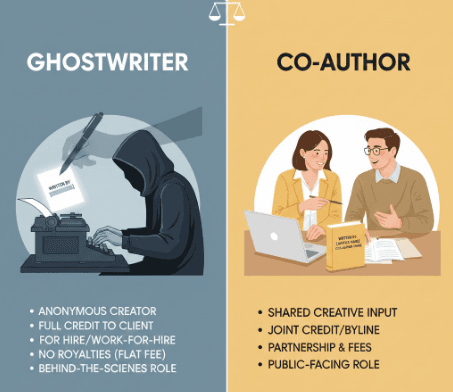
Debugging The Core Differences
What Is a Ghostwriter?
- Execute Your Ideas
- Translate Your Expertise Clearly
- Maintain Your Voice
- Meet Your Write-Up Goals
- Offer a Publish-Ready Manuscript
- Entrepreneurs
- Executives
- Coaches
- Leadership Personnel
Confidentiality, Ethics, and Agreements
- Book Ideas
- Stakeholder Identity
- Intellectual Property
Intellectual Property and Legal Considerations
Collaboration Models in Modern Publishing
- Supports Speed
- Authority
- Brand Clarity
So, What Can You Choose?
FAQs
1. Is hiring a ghostwriter even allowed legally?
Yes, ghostwriting is indeed very legal and attainable for anyone with a story worth telling. It is a service given by many publishing houses to enable authors to fulfil their long-term dream.
2. Will I still own my book completely if I hire a ghostwriter?
Yes, that's the main distinction between collaborating with a co-author and getting your book written by an experienced ghostwriter. The writer writes for you, meaning you retain full ownership, rights, and royalties.
3. Do co-authors split profits equally?
Well, it can happen, but not always. It depends on the co-author agreement and the agreed-upon terms between the parties.
4. Can readers tell if a book is ghostwritten?
No, professional ghostwriting maintains complete anonymity. So, without informing, your readers will probably never know it's ghostwritten unless you tell them, of course.
5. Which option is better for personal branding, ghostwriting or co-authoring?
Ghostwriting helps you stay as a singular entity and pushes your narrative under your name only, giving you more authority.
Author Bio:
Alex Philips is a professional content specialist focused on book publishing and author services. He writes and reviews technical and informative content to help aspiring and seasoned authors navigate the professional publishing process. His work focuses on quality, trust, and hassle-free creative writing.
GET FREE CONSULTATION
Recent Postss
Why Thousands of Authors Trust Berg Publisher for Professional Publishing Services?
08-Jan-2026Our Publishing Services Explained | Expert Book Publishing Services
13-Jan-2026Client Satisfaction Comes First at Berg Publisher Book Publishing Agency
14-Jan-2026Is hiring a ghostwriter from a ghostwriting agency worth it?
19-Jan-2026Why professional authors choose ghostwriting services?
19-Jan-2026Ghostwriter vs Coauthor: What Is the Difference?
22-Jan-2026Can I Hire a Ghostwriter Online to Write My Life Story?
28-Jan-2026What are eBook writing services, and how do they help businesses generate leads?
29-Jan-2026What Berg Publisher Does as a Leading Professional Book Publishing Agency?
30-Jan-2026A Guide to Understand Rights and Credits Retention in Ghostwriting Services.
06-Feb-2026Why Book Editing is More Important Than You Think?
11-Feb-2026How to Choose the Right eBook Writing Service for Your Book or Business?
18-Feb-2026Common Mistakes Authors Make Without an eBook Writing Service
19-Feb-2026How Much Do eBook Writing Services Cost?
23-Feb-2026Professional eBook Writing, Ghostwriting and Editing Services for Authors
23-Feb-2026Best Book Publishing Agencies for Aspiring Authors 2026
27-Feb-2026Manuscript getting rejected again and again?: 2026 best book editing service
02-Mar-2026Explore the top book marketing services: Self-book publishing authors 2026
05-Mar-202610 major benefits of hiring fiction ghostwriting services for your novel
06-Mar-2026How to design a professional book cover that sells in 2026
11-Mar-2026How to Hire a Fiction Ghostwriter for Your Novel
11-Mar-2026How to Choose a Book Publishing Agency for International Distribution?
12-Mar-2026How Book Publishing Agencies Choose Which Manuscripts to Publish?
13-Mar-2026The Day-to-Day Workflow of a Professional Book Publishing Agency?
16-Mar-2026How Editors at a Book Publishing Agency Shape Your Manuscript into a Bestseller?
16-Mar-2026AI vs human ghostwriters: Which is best for writing books in 2026?| ghostwriting services
18-Mar-2026What Most Authors Don't Know About Book Publishing Agency Submission Processes?
18-Mar-2026AI Ghostwriting in 2026: How Human Ghostwriters Still Add Value
19-Mar-2026Ghostwriting Services | Best AI Tools for Writing Books in 2026
18-Mar-2026Behind the Scenes: How Agencies Decide Marketing Budgets for Books?
23-Mar-2026How a Book Publishing Agency Evaluates Manuscript Potential (2026 Guide)
24-Mar-2026Do AI tools beat human writers?| Book publishing services explained
25-Mar-2026Book Publishing Service Explain, Will AI Replace Authors?
31-Mar-202610 Reasons to Hire a Professional eBook Writer in 2026
02-Apr-202630+ Questions to Ask an Author About Their Book (With Answer Guides)
03-Apr-2026How to Write a Book Without Typing
04-Apr-2026How Book Publishing Services Help Veterans Share Their War Stories?
05-Apr-2026How Agencies Handle Multiple Authors Efficiently?
06-Apr-2026How Book Publishing Agency Experts Predict Reader Trends?
15-Apr-2026Why Book Editing Services and Editors Matter in the AI-Driven Publishing Era?
22-Apr-2026Pricing Secrets: How a Book Publishing Agency Decides Author Royalties?
30-Apr-2026How does a Book Marketing Agency Handle Sci-Fi, Fantasy, and Romance Books Differently?
15-May-2026How to Negotiate the Best Deal with a Book Publishing Agency (2026 Guide)
20-May-2026I Published My First Book at 60: Guide to Book Publishing Services for First-Time Authors
01-May-2026The Real Cost of Publishing a Book via Book Publishing Services in 2026?
04-May-202630+ Questions Every Author Should Ask Before Using Book Publishing Services
13-May-2026Hire an EBook Writer to Build Brand Authority
19-May-2026How to Sell Short Stories on Amazon Kindle: Tips and Tricks for New Authors
16-Jul-20268 Podcast Recommendations for Writers and Self-Publishers (2026 Edition)
15-Jul-2026An Interview with USA Today Bestselling Author Kelly
14-Jul-2026How Do I Publish a Book for Free on Amazon Kindle Direct Publishing (KDP)? The Complete Step-by-Step Process
13-Jul-2026AI and Book Publishing in 2026: 4 Changes Every Author Should Know
10-Jul-2026Which Fonts and Font Sizes Are Best for Your Book's Interior Formatting?
07-Jul-2026Business Ebook vs Amazon Ebook: Two Completely Different Goals
29-Jun-2026Cost vs Value: Is a Professional Agency Worth It for Your Book?
26-Jun-202615 Creative Book Marketing Ideas for Self-Published Authors (2026 Guide)
20-Jun-20262026 Publishing Trends: What Authors, Editors & Publishers Must Know
19-Jun-2026Internal vs External Conflict: How They Are Used in a Story
15-Jun-2026Book Royalty Calculator: KDP vs IngramSpark vs Draft2Digital (Exact Math)
12-Jun-2026Best Publishing Platforms 2026 to 2027: The Ultimate Comparison Guide
11-Jun-2026AI Book Cover Design: Legal Risks Every US Author Must Know in 2026
10-Jun-2026How to Hire and Work with a New York Ghostwriting Company
24-May-2026How Much Do Ghostwriters Cost in New York? A Complete NYC Pricing Guide for 2026
23-May-2026The Ultimate Guide on How to Write a Book in 2026
22-May-2026Tips for Authors Writing in Less Popular or Emerging Genres
21-May-2026Top 10 Best Selling Authors of All Time | Book Publishing
20-May-2026

We create books that connect with audiences. From the initial outline to publication and marketing, we support our clients throughout the entire process.